Key points
- Construction surveying is priced by crew time plus travel, by lump sum, or by unit rates.
- Drawing quality, site readiness and travel drive the cost more than the survey work itself.
- Most extra cost comes from return trips, and most return trips can be planned out.
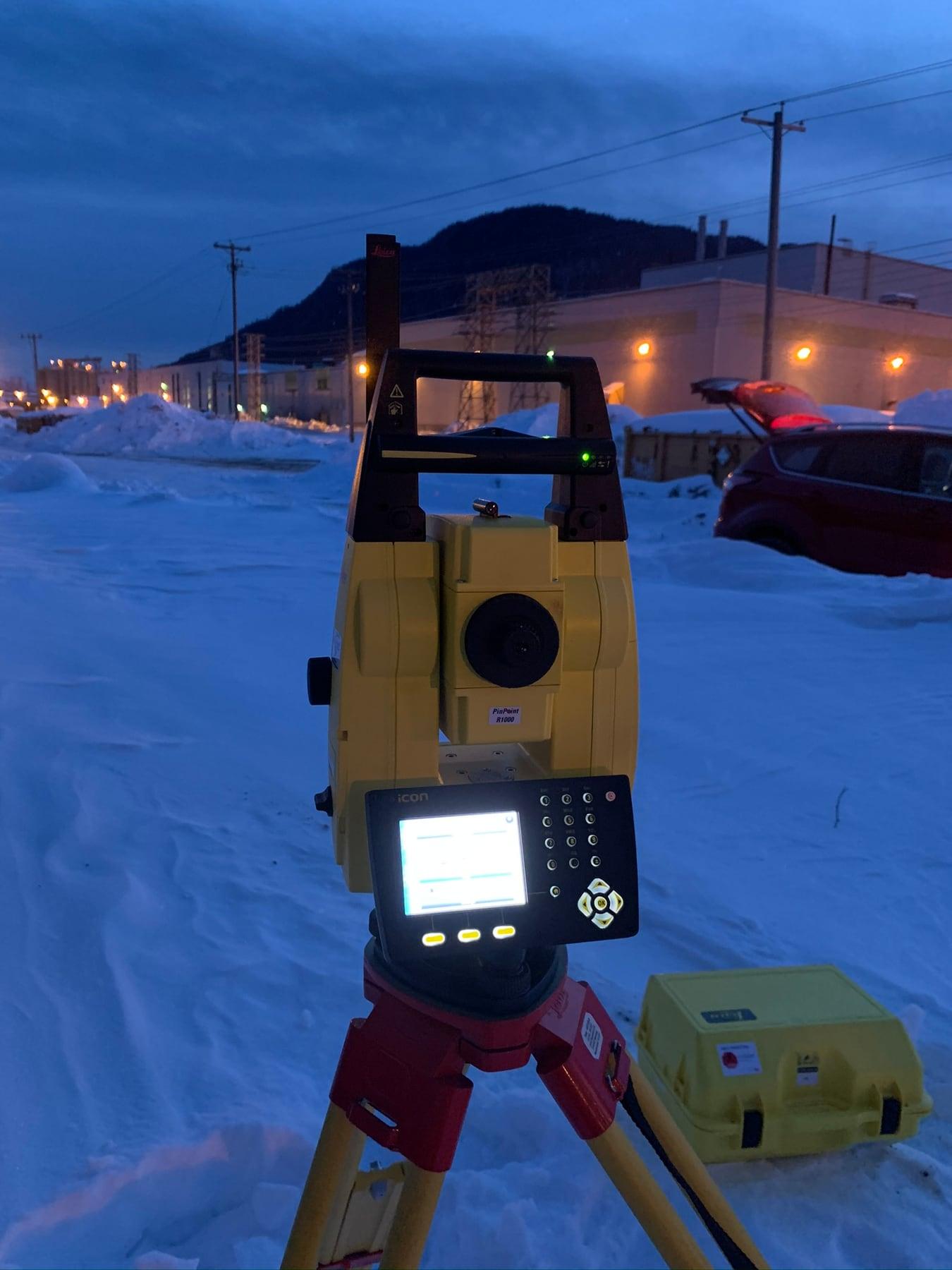
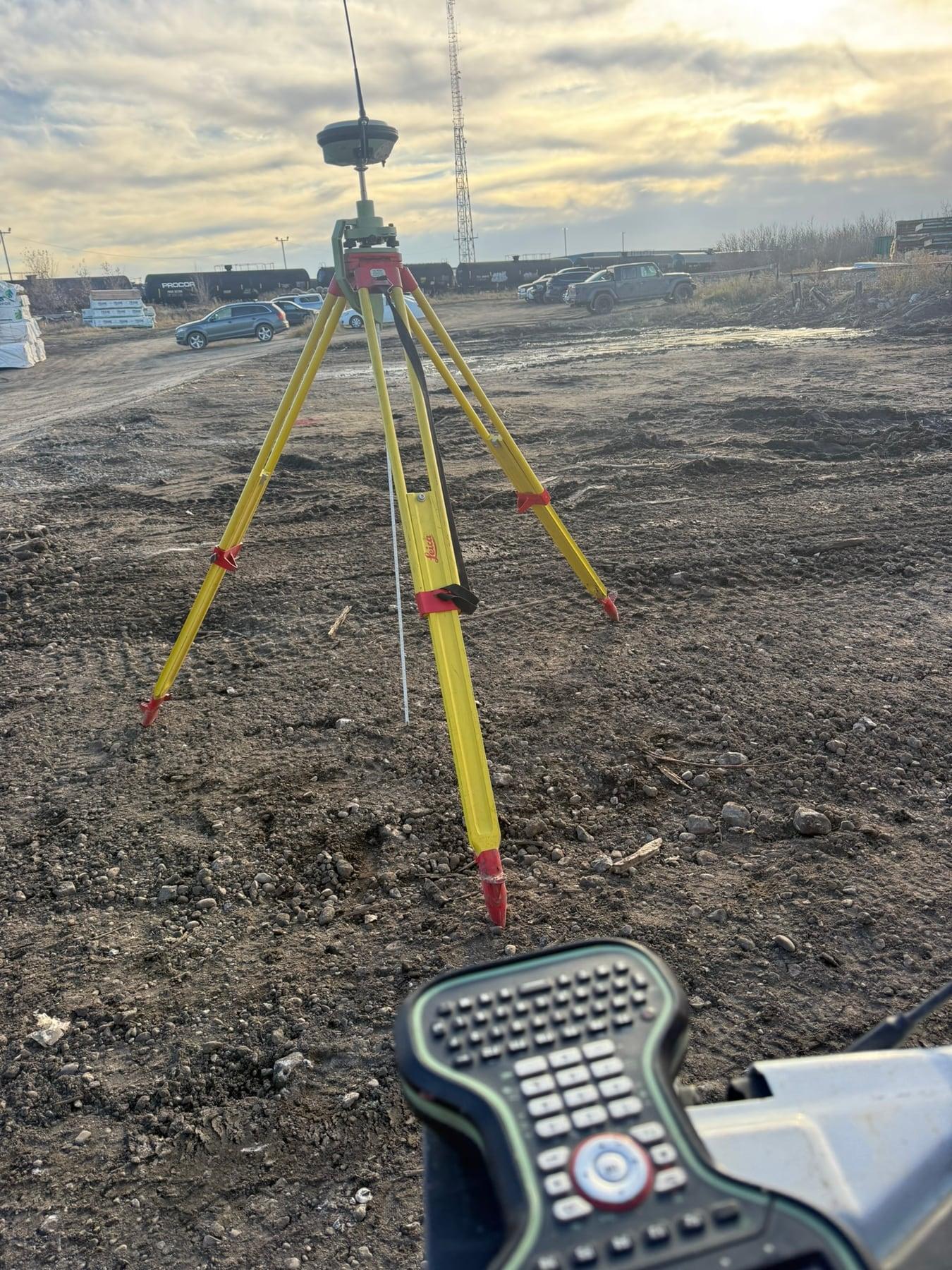
Construction surveying in Alberta is priced in one of three ways: an hourly or daily crew rate plus travel, a lump sum for a defined scope, or unit rates such as a price per pile or per visit. Which one suits your job depends on how well the scope is defined and how predictable the site will be.
This article does not list prices, because a number without a scope is not useful to anyone. It explains how each pricing method works, what pushes the cost up or down, and what to send to get a quote you can rely on.
How do survey companies price construction work?
| Method | How it works | Suits | Watch for |
|---|---|---|---|
| Crew rate plus travel | You pay for the time the crew spends on your job, usually with a minimum callout, plus travel and office time for calculations and reports. | Short jobs, callouts, and work where the scope will change. | Standby. If the site is not ready, the clock still runs. |
| Lump sum | A fixed price for a defined scope, with stated assumptions about the number of visits. | Well-defined projects with a complete drawing set and a firm schedule. | Scope changes and extra visits, which are priced as extras. |
| Unit rates | A price per pile, per gridline, per bolt group, per visit or per survey. | Repetitive work where the quantity is uncertain, such as pile programs. | What is included in the unit: layout only, or layout and as-built with a report. |
Many jobs combine them. A building might have a lump sum for control and foundation layout, unit rates for piles, and a crew rate for callouts the contractor requests along the way. A good quote says which method applies to which part of the work.
What makes construction surveying cost more or less?
- Drawing quality. A complete, coordinated drawing set with closing dimensions is quick to calculate. A set with conflicts between disciplines takes office time to sort out and usually an RFI or two.
- CAD availability. Working from CAD is faster than rebuilding geometry from PDF dimensions, and it removes a source of error.
- Existing control. If good control is on site and documented, layout starts right away. If not, establishing it is part of the first visit.
- Site access. Orientations, permits, escorts, long walks from the gate and restricted hours all add time that is not survey work.
- Standby. Waiting for an excavation to be finished, a slab to be cleared or a permit to be signed costs the same as surveying.
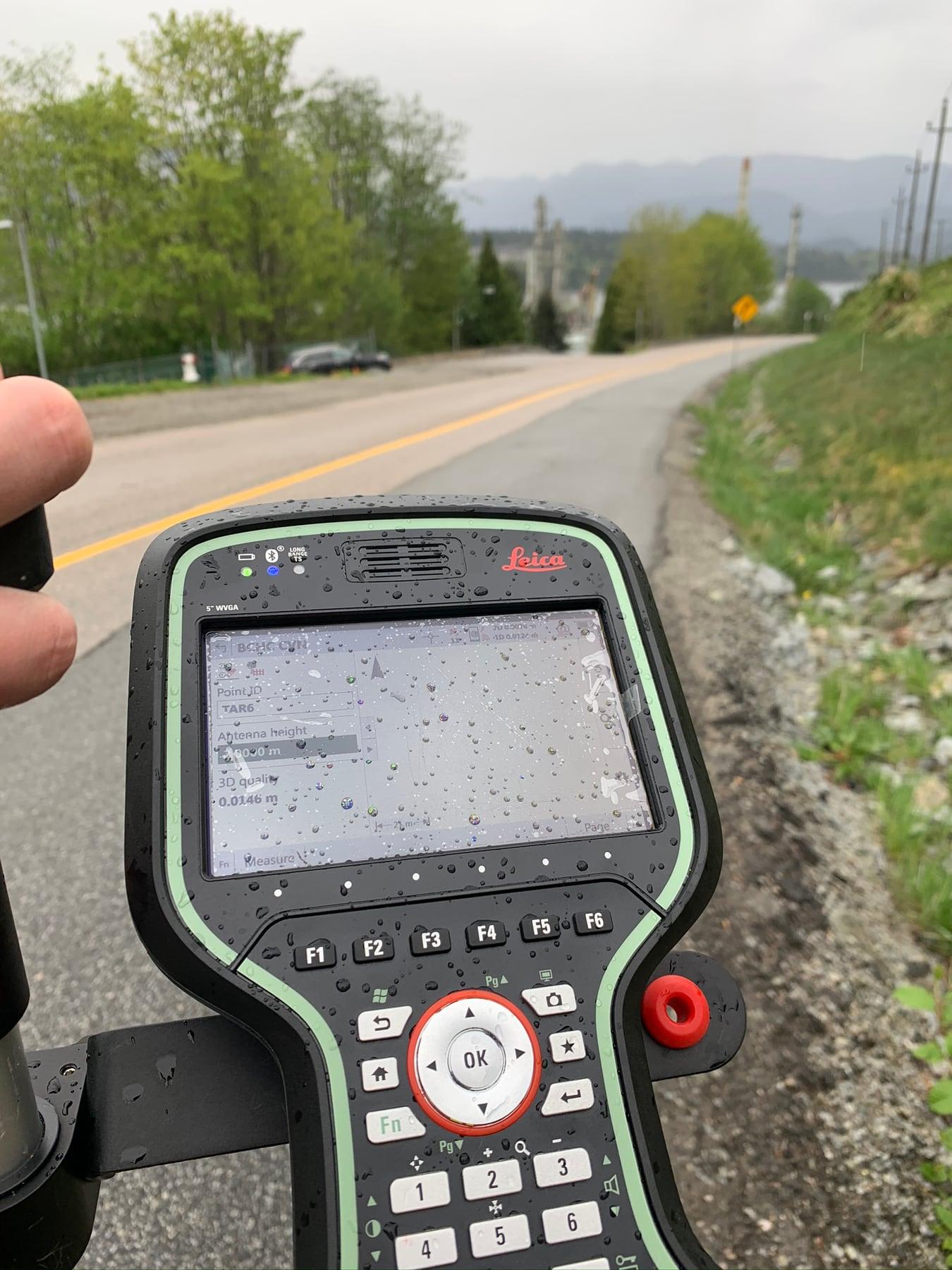
- Travel and living out allowance. For remote sites, travel time, mileage, accommodation and LOA can be a large share of the bill. Fewer, longer visits spread that cost over more work.
- Reporting. A set of stakes with a field sketch takes little office time. A formal as-built report with deviation tables, plans and CAD files takes more. Ask for what you need, and say so up front.
- Accuracy required. Earthworks grade stakes set by GNSS go quickly. Anchor bolts and equipment foundations set by total station with independent checks take longer per point.
- Season. Winter work is slower, as explained in winter construction surveying in Alberta.
How do you get an accurate survey quote?
Send enough that the surveyor can count the work. The more that is known, the fewer allowances have to be built into the price.
- The site location, so travel can be priced.
- The current drawing set, in PDF and CAD if available.
- The scope in plain terms: what you want staked, what you want as-built, and what reports you need.
- Quantities where you have them, such as the number of piles, bolt groups or metres of pipe.
- The schedule and sequence, including how many separate mobilizations you expect.
- Site requirements: orientation, safety documentation, insurance and any prequalification.
- Who supplies control, and whether it has been checked.
The full list of what to provide is in what to send your surveyor before layout. When you compare quotes, compare the assumptions as well as the totals. Check whether travel, office calculations, reports and CAD deliverables are included, how many visits are allowed for, and what an extra visit costs.
How do you avoid paying for return trips?
Return trips are where survey budgets go wrong. Most are avoidable.
- Call the crew when the site is ready, not when it is nearly ready. Confirm the day before.
- Combine scope. If footings and underground services can be staked the same day, book them together.
- Ask for offsets and reference points that will survive. A second line of offsets set on the first visit costs little and can save a callout.
- Protect the stakes. Tell operators where they are, flag control points and keep materials off them. See how to read survey stakes.
- Send drawing revisions as soon as they are issued, so nothing is staked from a superseded sheet.
- Have one person on site direct the surveyor, so priorities do not change mid-visit.
- Use the stakes soon after they are set. Marks that sit for weeks get knocked out.
Is the cheapest survey quote the best value?
Survey fees are a small part of a construction budget, and the cost of a layout error is not. A footing poured in the wrong place or a pile field staked from the wrong benchmark costs many times the survey fee to fix. When you weigh quotes, ask how the layout is checked. Our own practice is that every layout is checked in the office before the crew leaves and checked again in the field before it is handed over. Ask also whether the company carries professional liability insurance, and what you receive at the end of each visit.
Which pricing method should you ask for?
If the drawings are complete and the schedule is firm, ask for a lump sum with the number of visits stated. If the job is a pile program or other repetitive work, ask for unit rates. If you need a crew for a day to solve a specific problem, a crew rate is simplest. If you are not sure, describe the job and ask the surveyor which they would recommend and why. Our construction layout and pile layout pages list what is normally included in each scope.
For a written quote on your project, send the drawings and schedule through the quote form or call (587) 714-2362.