Key points
- An as-built survey measures what was actually built and compares it with the design.
- The right time is as soon as the work is complete and still visible, and before the next trade builds on it.
- A useful report shows design and measured values side by side, with the difference and the control it was measured from.
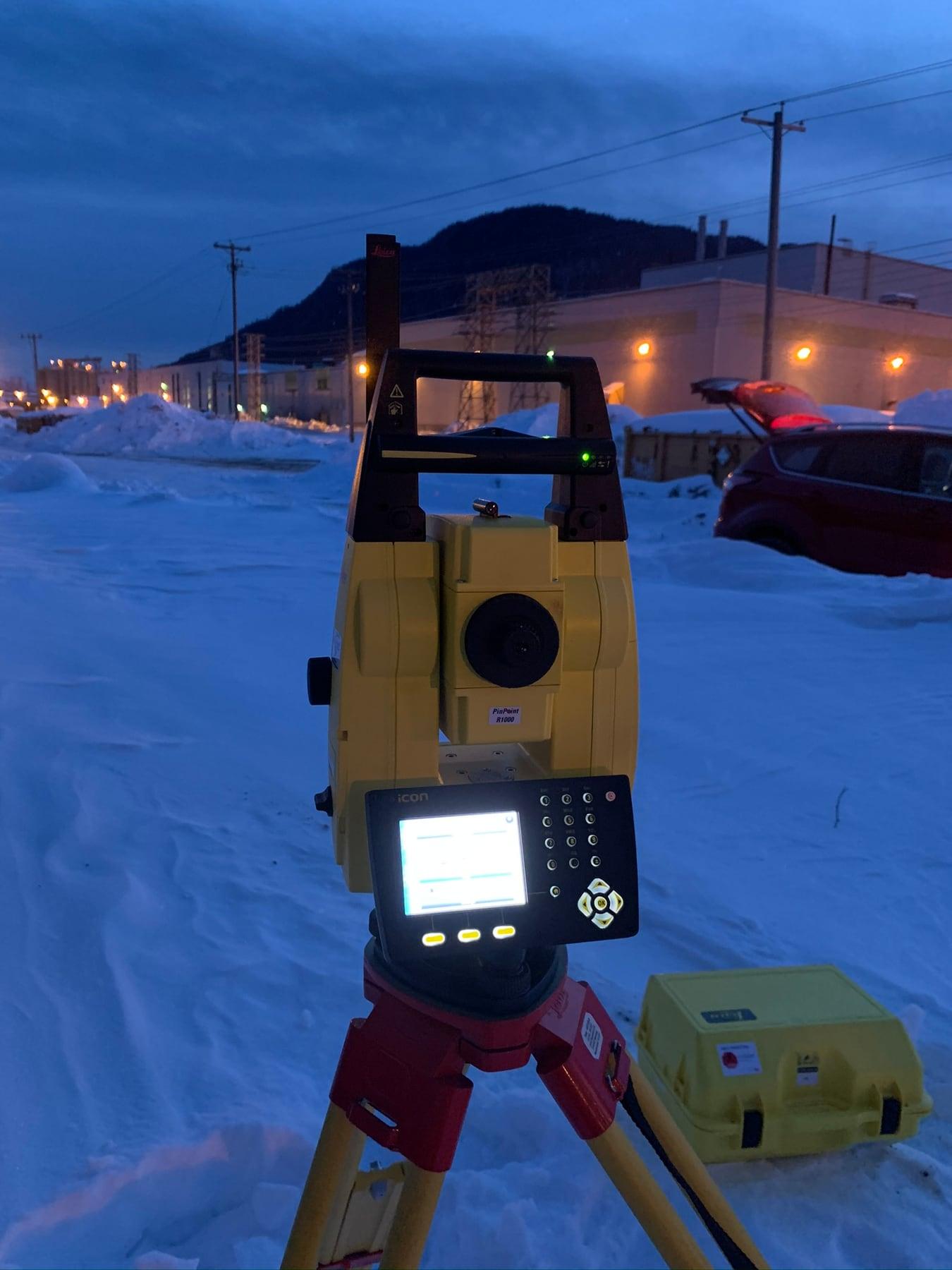
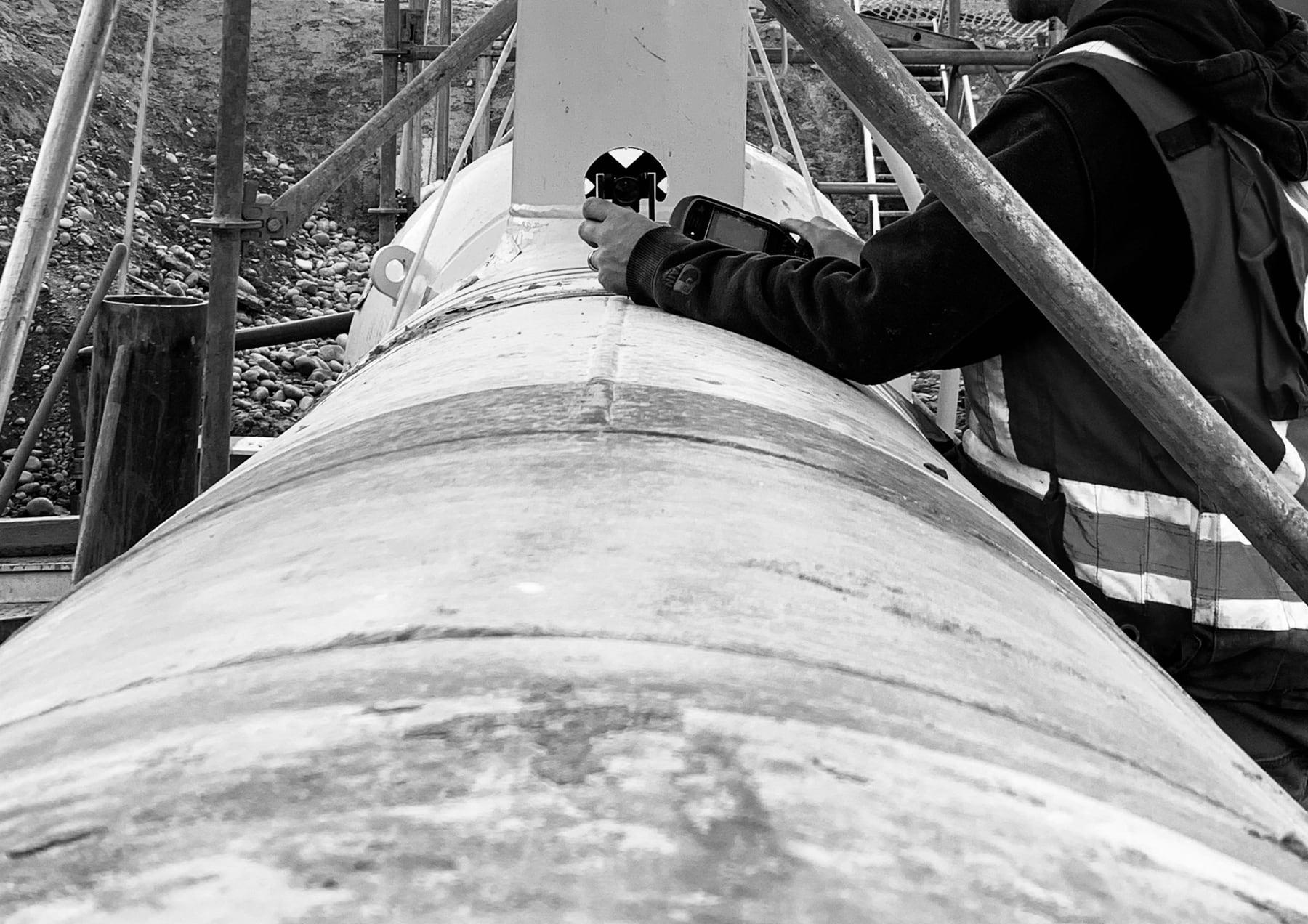
An as-built survey is a measurement of finished work. A surveyor records where a pile, footing, anchor bolt, pipe or finished grade actually ended up, and reports that position against where the drawings said it should be.
Layout puts the design on the ground. The as-built proves how closely the work followed it. Most projects need both, and the as-built is the one that gets left too late.
What does an as-built survey measure?
Anything that has a design position or elevation can be surveyed once it is built. On a typical project the list looks like this:
- Piles: centre position and top elevation of each pile, against the pile schedule. See pile layout and as-built surveys.
- Foundations: footing and wall positions, top of concrete elevations and slab edges.
- Anchor bolts and embeds: position, rotation and projection of each bolt group before steel arrives.
- Structure: column centres, floor elevations and gridlines carried up the building.
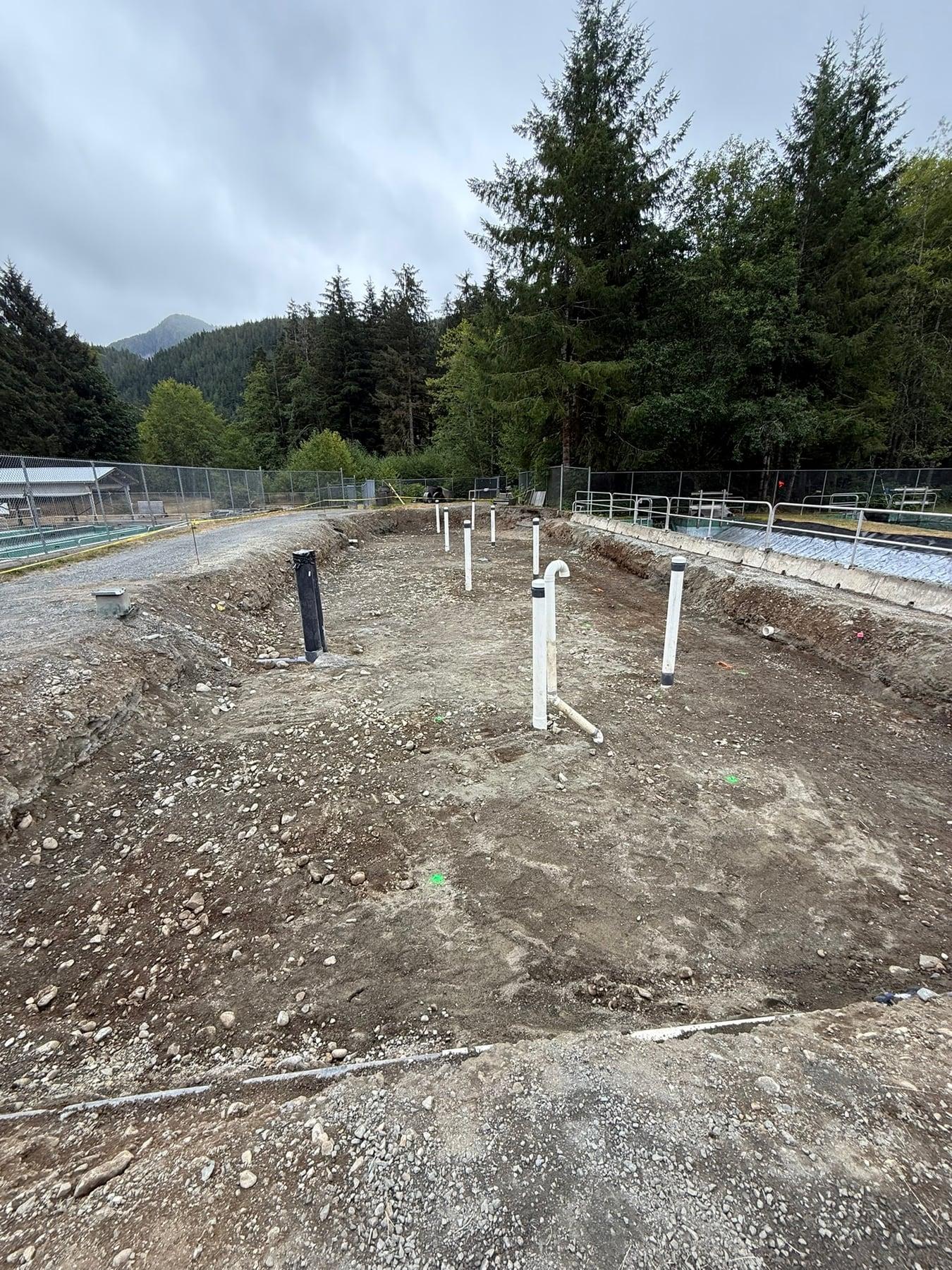
- Underground services: pipe inverts, manholes, valves, bends and service connections, measured in the open trench.
- Site works: subgrade, base and finished surfaces, curb and gutter, and drainage structures.
- Earthworks: finished surfaces compared with the design surface, with cut and fill reported.
When should an as-built survey be done?
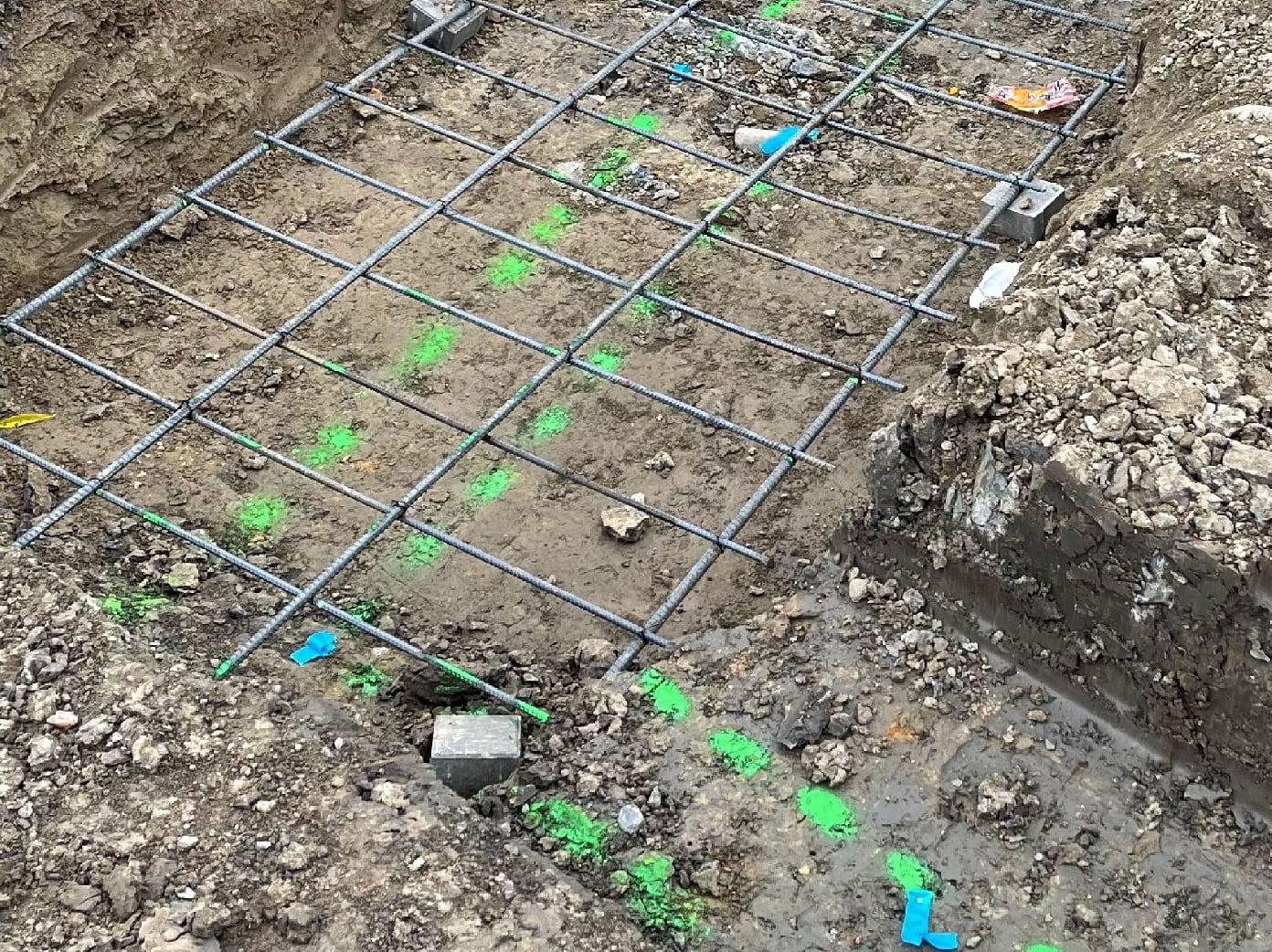
As soon as the work is complete and while it can still be seen and fixed. Timing is the whole value of an as-built. A pile that is out of position is an engineering question while the cap is still rebar. Once the cap is poured it is a repair.
| Work | Survey it | Why then |
|---|---|---|
| Piles | After installation, before cut-off and caps | The engineer can review deviations before concrete covers them. |
| Anchor bolts | After the pour has set, before steel ships | The fabricator and erector can plan around anything that moved. |
| Buried pipe | Before backfill | Inverts and fittings can only be measured directly while the trench is open. |
| Subgrade and base | Before the next lift | High or low spots are cheap to correct before material goes on top. |
| Finished grades | Before landscaping and paving close out | Drainage problems show up on the cut and fill map, not after the first rain. |
The simplest way to get the timing right is to book as-builts at the same time as layout. If we stake the piles on Monday, the as-built visit can be pencilled in for the day the rig finishes that block.
What is in an as-built report?
A good report can be read in a minute by the person who has to make a decision from it. It should contain:
- A table listing each item with its design value, its measured value and the difference in each direction.
- A plan showing the as-built positions over the design, with anything outside tolerance marked.
- The control points and benchmarks the survey was measured from, and the check shots taken on them.
- The date of survey, so it is clear what stage the work was at.
- Digital files: a CSV of coordinates and a CAD drawing in the project coordinate system.
The tolerance itself comes from your specification. The surveyor reports the deviation. The engineer decides whether it is acceptable.
How accurate is an as-built survey?
It depends on the instrument and on the control. A total station measuring from good project control is good to a few millimetres over normal site distances, which is what piles, anchor bolts and structural steel need. RTK GNSS is typically good to a couple of centimetres, which suits earthworks, site grading and most buried services.
The control matters as much as the instrument. An as-built measured from a disturbed benchmark is precisely wrong. That is why every survey should include check shots on known points, and why site control is worth setting properly at the start of a job.
Who uses the as-built?
- The engineer of record, to accept the work or design a fix.
- The next trade, to know what it is connecting to. Steel fabricators in particular rely on anchor bolt as-builts.
- The general contractor, as a record that the work met the drawings when it was handed over.
- The owner and the design consultant, for the record drawings at closeout.
Should the as-built be independent of the layout?
Sometimes. When the same surveyor lays out and as-builts the work, the result is consistent and quick, and any difference found is the trade's placement, not a second set of control. When an owner or general contractor wants a check on a subcontractor's own layout, an independent as-built from project control is the right tool. We do both, and we say in the report which control was used.
How do you keep as-built costs down?
- Book the visit when layout is booked, so it lines up with the work and does not become a rush call.
- Group items. One visit for a full block of piles costs less than three visits for partial blocks.
- Keep control points protected. Re-establishing control before every survey is time you pay for.
- Tell us the reporting format your engineer wants before the first survey, not after it.
More on pricing is in what construction surveying costs in Alberta.
To book an as-built survey anywhere in Alberta, call (587) 714-2362 or send the drawings and your schedule through the quote form.