Key points
- Survey anchor bolts twice: in the template before the pour, and in the concrete after it.
- Tolerances come from the project specification and the standards it references, not from the surveyor.
- The report should reach the fabricator and erector before steel ships.
Anchor bolts are surveyed before the steel arrives because steel is fabricated to the drawings, not to the site. If a bolt group is out of position, rotated or set at the wrong height, the base plate will not fit, and the cheapest time to find that out is before the crane and the erection crew are on site.
The usual practice is two surveys. One checks the bolts in their templates before the concrete is placed, while they can still be moved. The second measures them after the pour, and that is the survey the fabricator and erector rely on.
Why survey anchor bolts before the pour?
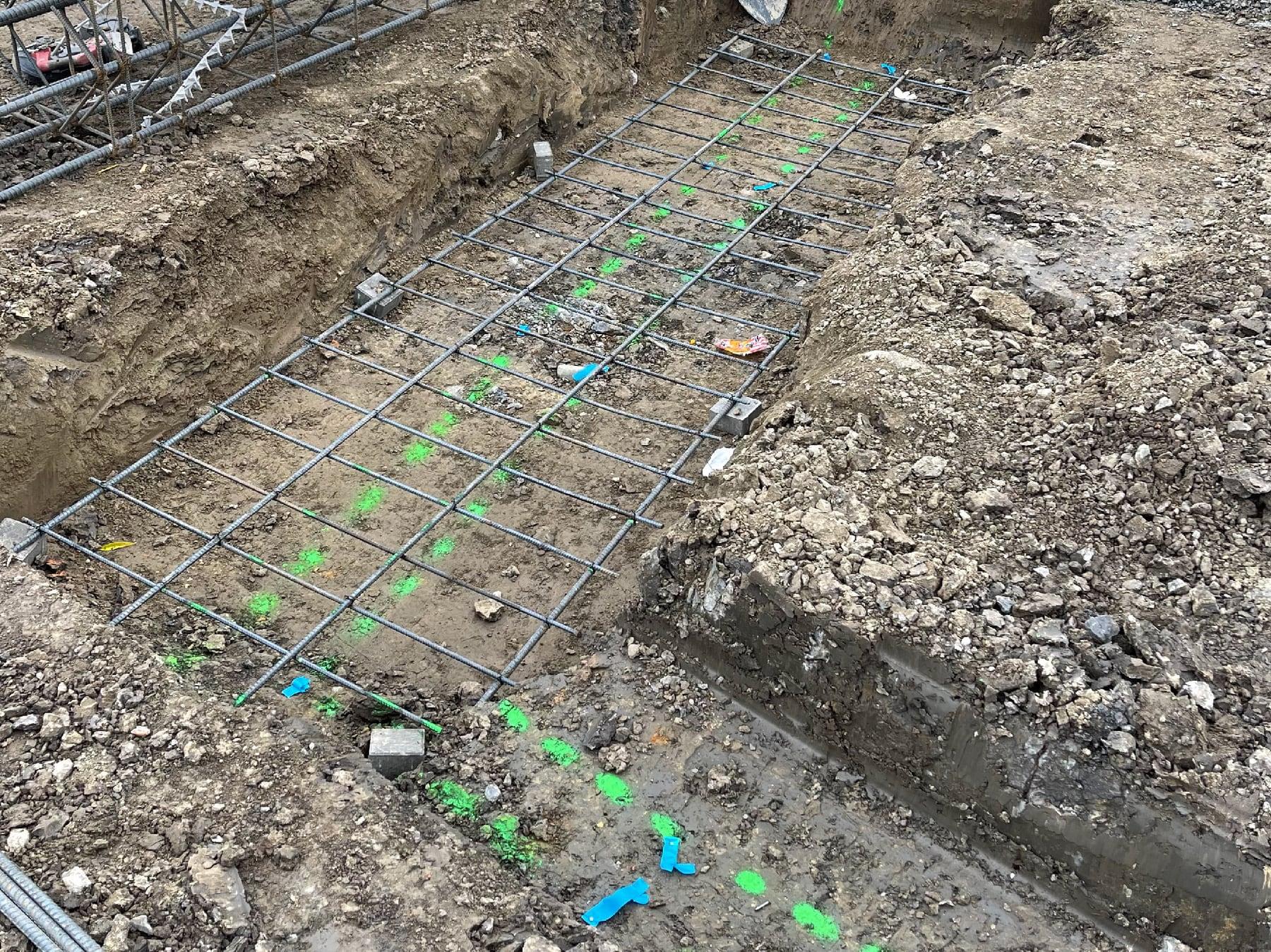
Before the pour, a mistake costs a few minutes with a hammer and a wrench. The surveyor checks each template against the gridlines for position and orientation, and checks the top-of-bolt elevation against the base plate detail. Anything out is adjusted on the spot and measured again.
This check also catches layout errors that have nothing to do with the bolts themselves: a template built to the wrong pattern, a group turned ninety degrees, or a pier formed off the gridline so the bolts no longer have the edge distance shown on the drawings. See gridline and anchor bolt layout for how the bolts are set out in the first place.
Why survey them again after the pour?
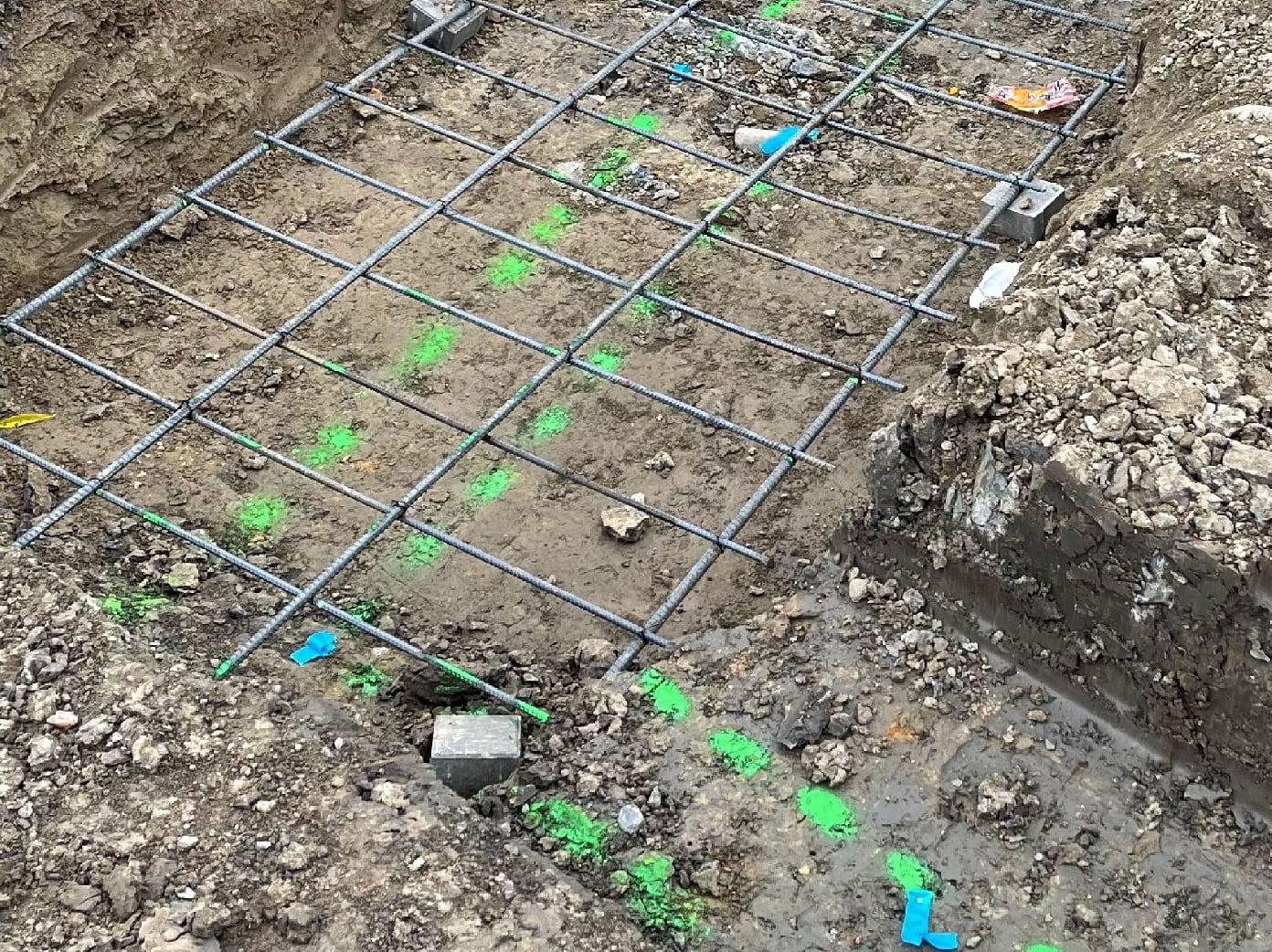
Because templates move. Concrete is heavy and it is placed quickly. A pump hose or vibrator bumps a template, a form shifts under load, or a bolt is nudged during finishing. A group that was right at nine in the morning may not be right at noon.
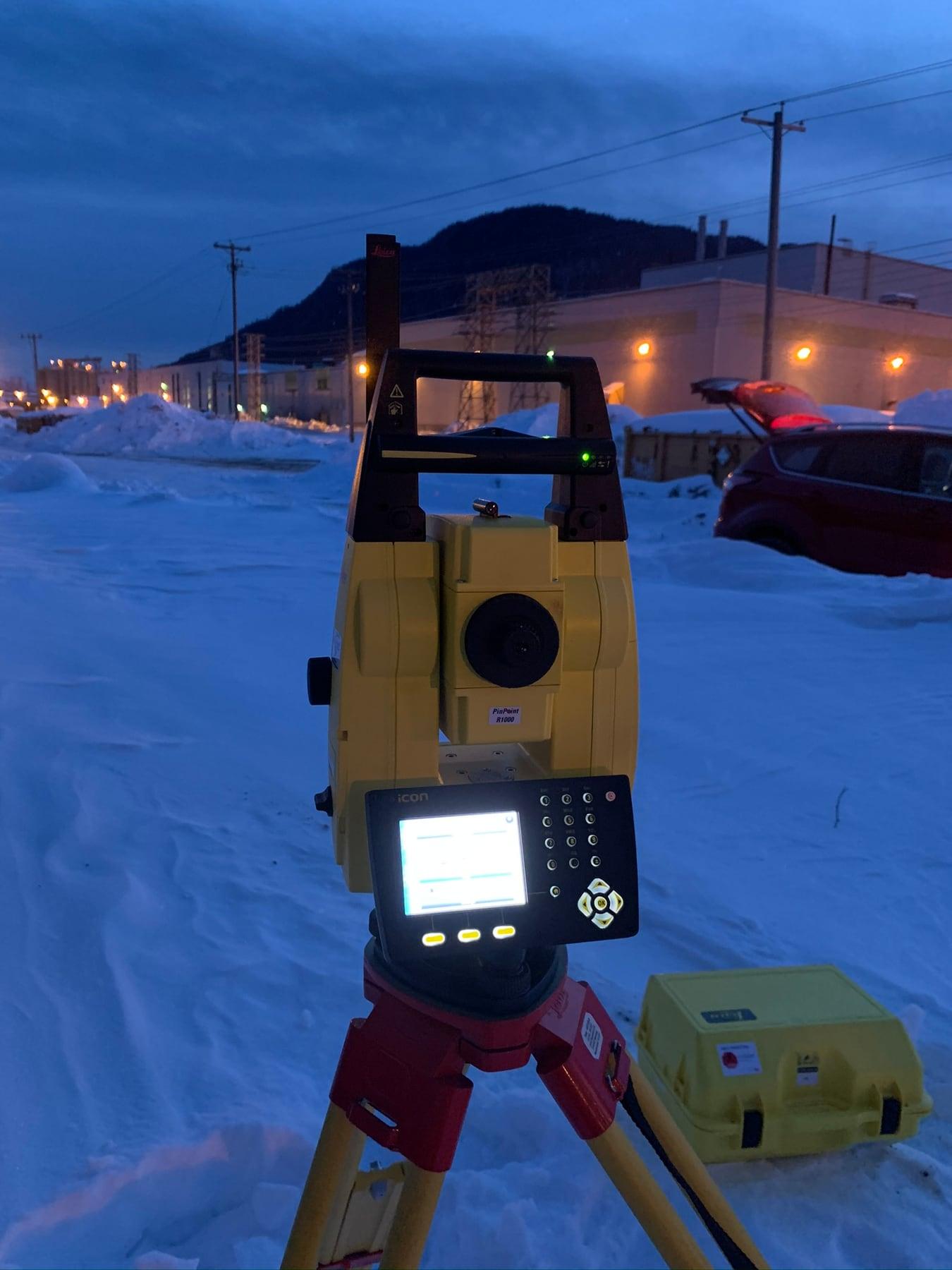
The second survey is done once the concrete has set and the templates are stripped. It records where the bolts ended up, which is the only position that matters to the steel. It is measured with a total station from the same project control used for the foundation layout, so the bolts are reported in relation to the gridlines of the whole building and not only to each other.
What does an anchor bolt as-built report contain?
- Each bolt or bolt group identified by gridline or column mark.
- Design and as-built position, with the difference shown along each gridline direction.
- Rotation of the group where it matters.
- Top-of-bolt elevation and the projection above the concrete.
- Top-of-concrete or top-of-pier elevation at each location.
- A plan with anything outside the specified tolerance marked up.
- The control and benchmarks used, with the check measurements.
- A CAD file of the as-built bolt positions, if the detailer wants to overlay it on the model.
The report shows deviations as measured. It does not pass or fail the work unless the specified tolerances have been provided, and even then the decision on an out-of-tolerance bolt belongs to the engineer.
What tolerance applies to anchor bolts?
The tolerance comes from your project specification and the standards it references. Specifications in Canada typically point to CSA standards for concrete and steel construction and to CISC documents for steel erection. The allowable deviation can differ between projects and between types of structure, and equipment foundations often carry tighter requirements from the equipment supplier.
Send the surveyor the relevant specification section or the tolerance values with the request. The report can then show each bolt against the allowable figure and flag the ones that need a decision.
A total station is good to a few millimetres over normal site distances. That is close enough to judge bolts against typical tolerances, provided the control is sound. If the control has moved, every bolt on the report moves with it, so control checks are recorded with each survey.
What problems does the survey usually find?
| Problem | What it looks like | Usual cause |
|---|---|---|
| Template shift | The whole group is displaced in one direction, with the bolt pattern intact. | Template bumped or form moved during the pour. |
| Rotated group | The pattern is right but turned about its centre, or set ninety degrees out. | Template placed without checking orientation to the gridline. |
| Wrong projection | Bolts are too high or too low for the base plate, grout and nut. | Elevation set from the wrong benchmark or to top of form instead of top of concrete. |
| Bolt out of plumb | The top of the bolt is in the wrong place while the base is right. | Bolt leaned or was knocked before the concrete set. |
| Wrong pattern | Spacing within the group does not match the base plate. | Template built from a superseded drawing or the wrong detail. |
| Pier off grid | Bolts are on grid but too close to the edge of the concrete. | Formwork set from a different reference than the bolts. |
Who should get the anchor bolt report?
- The general contractor or construction manager, who owns the schedule.
- The concrete contractor, who may need to correct the work.
- The steel fabricator and detailer, who can sometimes adjust base plates in the shop if they know early.
- The steel erector, who will plan around any problem locations.
- The engineer of record, who decides on any repair.
Timing is the whole point. A report issued the day after the pour gives the fabricator a chance to act. The same report issued the morning the steel arrives only explains why the crane is idle. Our anchor bolt reports usually go out the next business day.
How do you fit the survey into the pour schedule?
- Book the pre-pour check when the pour is booked, and allow time for adjustments before the trucks arrive.
- Book the as-built for as soon as the templates are stripped.
- On large foundations poured in stages, survey each pour as it is finished so an error is not repeated on the next one.
- Send the base plate details and the anchor bolt plan with the request, at the current revision.
- Tell the surveyor who needs the report and by when.
The same approach applies to embeds, sleeves and cast-in plates, and to piles before caps are formed. Other pre-cover checks are described under as-built surveys.
To book an anchor bolt check or as-built, call (587) 714-2362 with your pour date, or send the drawings using the quote form.