Key points
- We travel from Edmonton to Fort McMurray and Grande Prairie for layout, as-built and volume surveys.
- Both regions reward planning: grouping scope into fewer, longer visits keeps travel cost down.
- Send drawings and control early so calculations are done before the crew leaves town.
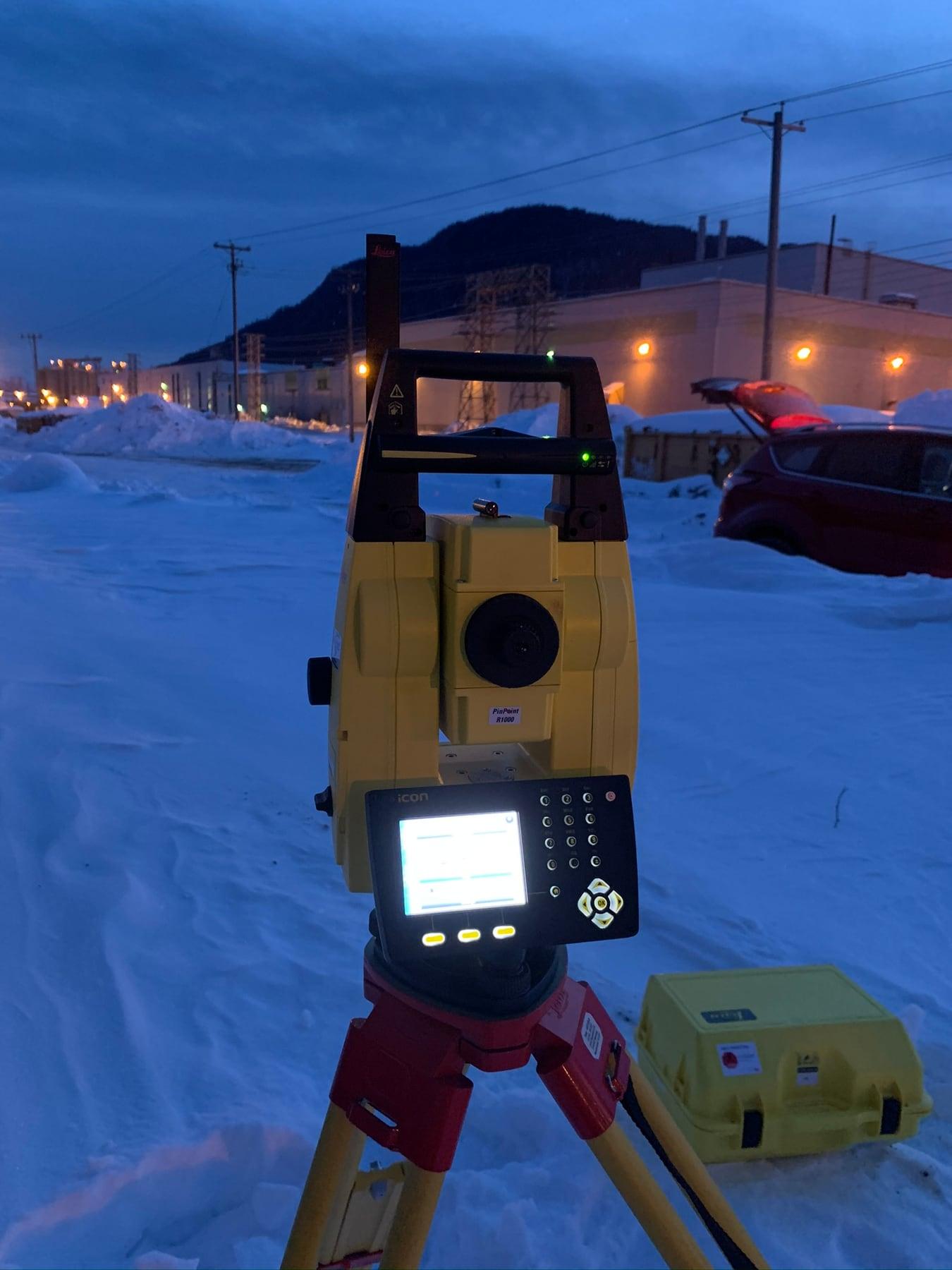
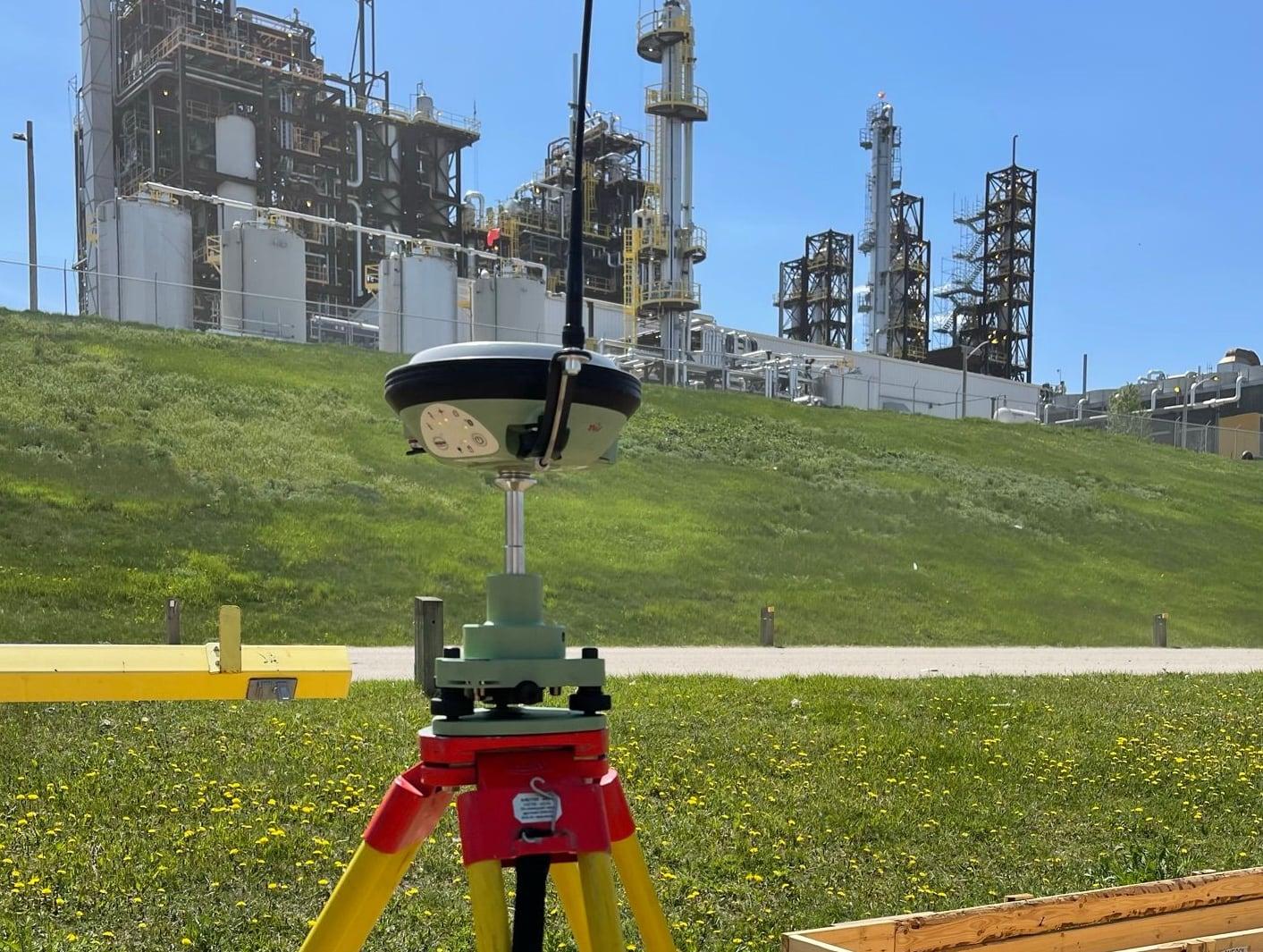
Alberta Construction Surveying provides construction layout, as-built and volume surveys in the Fort McMurray and Grande Prairie regions. We are based in Sherwood Park and mobilize crews to both areas for pile staking, gridline layout, footing staking, benchmarks, complete site layout, volume surveys and mine site stakeout.
Each region is roughly four and a half hours from Edmonton in good conditions, Fort McMurray by Highway 63 and Grande Prairie by Highway 43. That distance shapes how the work is best planned, which is covered near the end of this article.
What survey work do we do in Fort McMurray and Grande Prairie?
- Pile staking: pile centres marked and numbered ahead of the rig, then surveyed after installation. See pile layout.
- Gridline layout: primary gridlines and offsets for formwork, steel and interior trades.
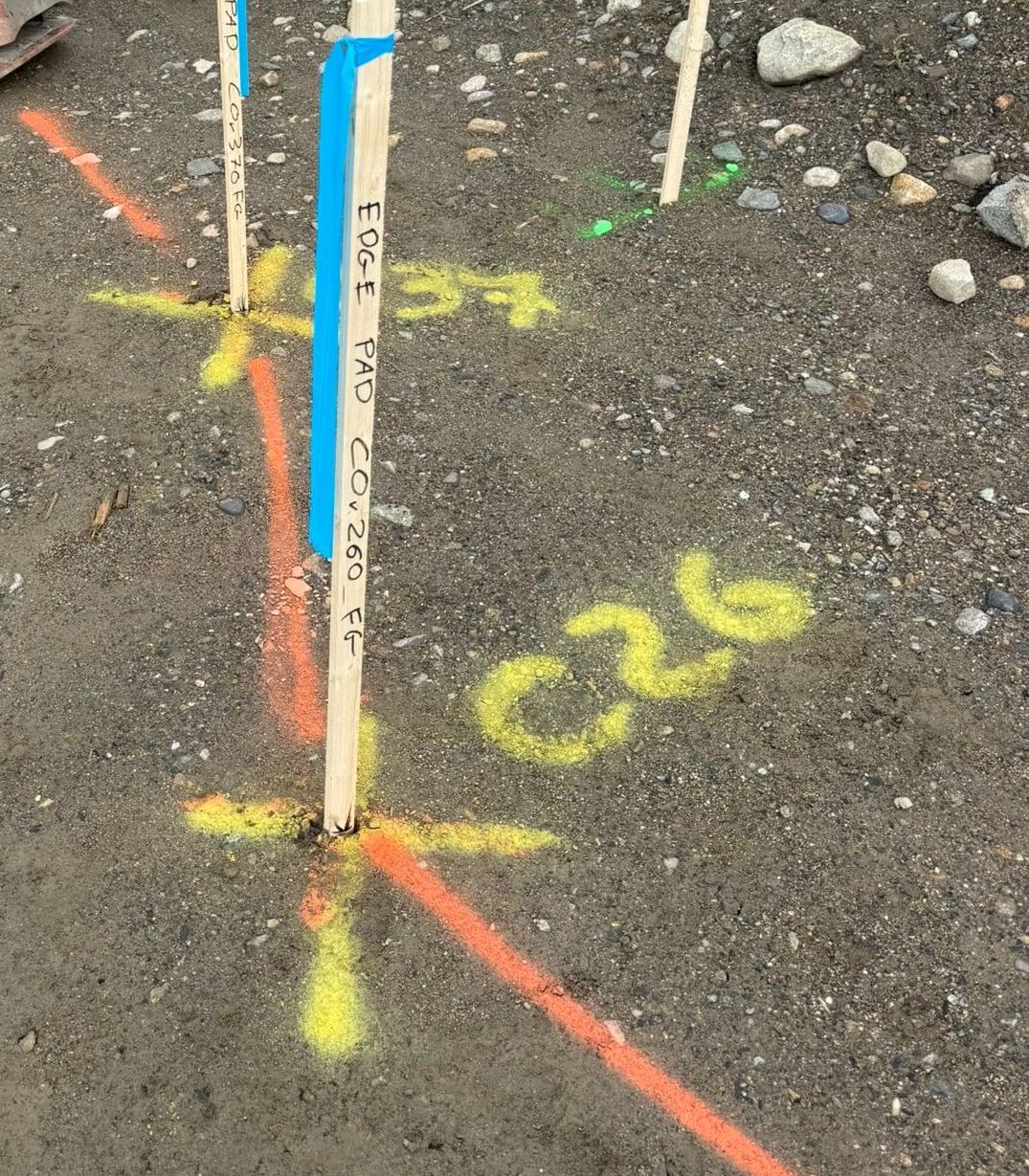
- Footing staking: strip and pad footings, pile caps, grade beams and walls set on offsets the forming crew can pull from.
- Benchmarks and control: horizontal control and benchmarks set, checked and documented. See control surveys.
- Complete site layout: buildings, columns, anchor bolts, underground utilities, roads, curbs and grading from first stake to final as-built.
- Volume surveys: original ground, stockpiles, borrow pits and progress quantities.
- Mine site stakeout: construction stakeout for roads, pads, ponds, berms and facilities on mine sites.
What is different about surveying around Fort McMurray?
Work north of the city is mostly industrial. Oil sands facilities use their own plant coordinate systems and datums, and each has its own orientation, permit and vehicle requirements. A crew cannot simply show up. We ask for the site requirements when the job is booked so paperwork is done ahead of the first day, and we confirm the control against the drawings before any layout is set. South of the city, toward Conklin, the same applies to in situ facilities along Highway 881.
In town, the work looks like construction anywhere else in Alberta: commercial buildings, multi-family housing, municipal servicing and roads. More detail is on the Fort McMurray page.
What is different about surveying around Grande Prairie?
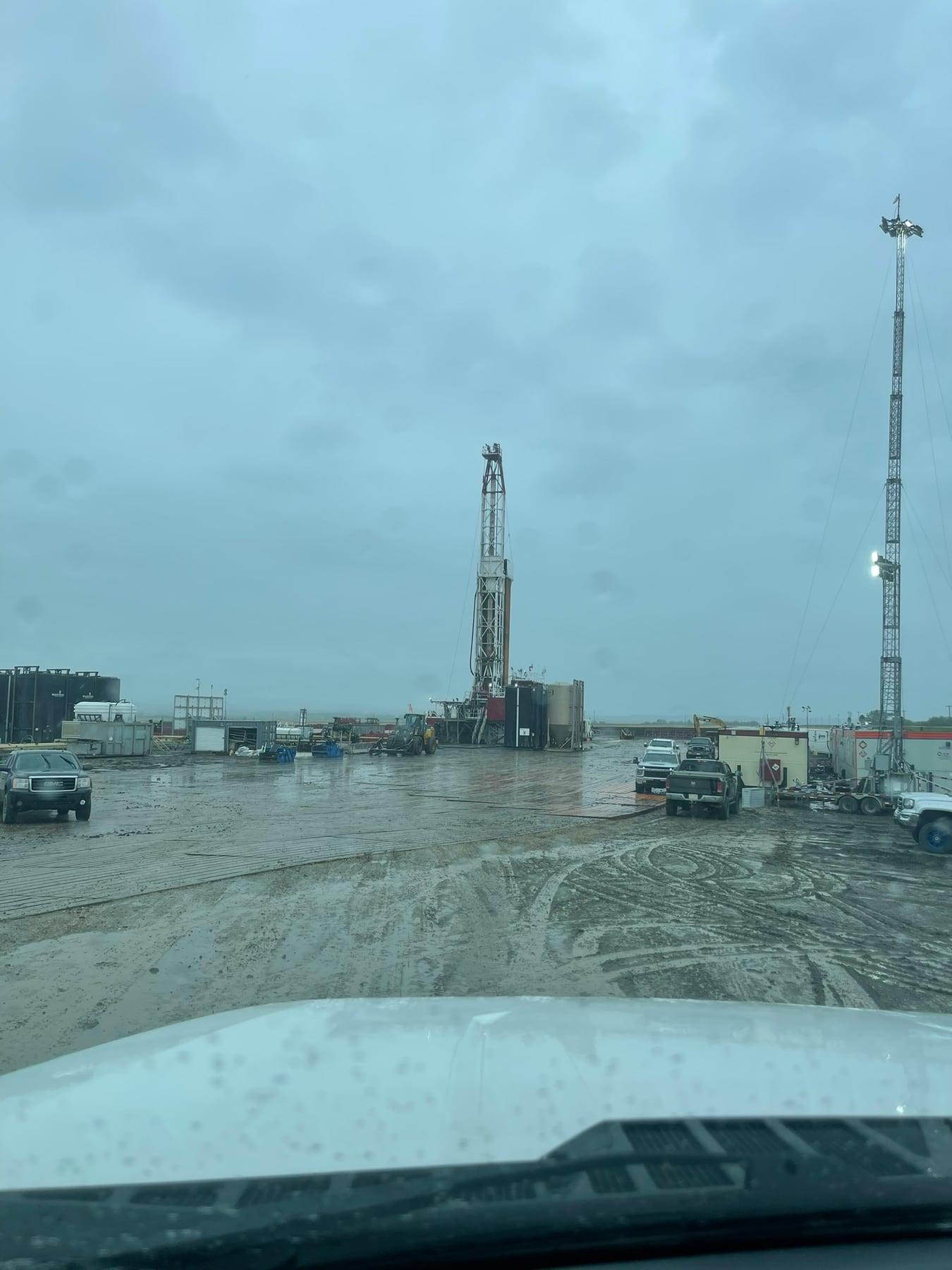
Grande Prairie is a regional centre for natural gas, forestry and agriculture. Survey work there is a mix of gas plants, compressor stations and well pads in the surrounding country, and commercial, institutional and subdivision work in the city and nearby towns. Lease and pad construction calls for original ground surveys, pad and berm layout, and volumes. Building work calls for gridlines, footings and anchor bolts. See the Grande Prairie page for the area we cover.
What does mine site stakeout involve?
On a mine site, construction stakeout covers the things that get built to a design: haul and access roads, laydown areas, pads, ditches, ponds, berms and the foundations for buildings and equipment. Most of it is done with RTK GNSS, which is typically good to a couple of centimetres and suits large open areas. Foundations, anchor bolts and steel are set with a total station, which is good to a few millimetres over normal site distances. Volume surveys of stockpiles and excavations are often done at the same visit. See earthworks and volume surveys for how quantities are reported.
How do you keep travel costs down on a northern job?
- Send drawings, CAD files and control early. Calculations are checked in the office so site time is spent measuring.
- Group the scope. One two-day visit that covers piles, footings and a benchmark check costs less than three single-day trips.
- Give a realistic ready date. A crew that arrives before the excavation is finished is on standby.
- Have access sorted: orientations booked, escorts arranged, and a site contact who answers the phone.
- Ask for extra offsets and reference points on the first visit so your own crew can re-establish a lost mark without a callout.
For a crew in either region, phone (587) 714-2362 with your location and dates, or send the details through the quote form.
Updated November 29, 2026